What industry wants: model-based systems engineering
A course takes students from customer concept to design or prototype inside two semesters, often mentored by engineers at big name corporate sponsors.
2–4 minutes

A course takes students from customer concept to design or prototype inside two semesters, often mentored by engineers at big name corporate sponsors.
In March 2020, George Halow set out to close a significant gap between industry and academia. A professor of practice in aerospace engineering and former Ford executive, he had plans for a course giving undergrads hands-on experiences with technology that was rapidly becoming the industry gold standard for complex product development.
But it launched deep in the pre-vaccine stage of the COVID-19 pandemic. Halow had to be scrappy finding space and equipment, with the promise of up to $15,000 when the department could get some money together.
Two weeks into the pilot, he got a call from one of the course’s industrial partners. Siemens wanted to help fund the course. The rep was a little cagey about the amount, so Halow asked, “Should I be sitting down?”
Siemens was putting up $100,000. For the first time, a dedicated lab seemed possible. Within a couple of months, other members of the aerospace department’s industrial board pledged another $200,000. The Model-based Systems Engineering Leadership Lab was launched in September 2021, a first-of-its-kind facility for aerospace engineering students.
What exactly does it teach? Model-based systems engineering, or MBSE, models an entire engineering system digitally before anything is built. With huge potential for cost savings in new engineering designs, it has rapidly risen to prominence in the aerospace, automotive, naval and defense sectors.
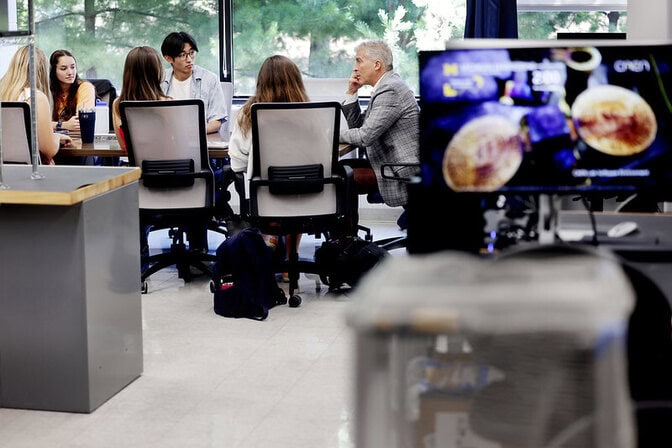
“MBSE really forces you to think differently, more holistically, about the product you’re helping engineer,” said David Taylor, Vice President for Industrial Strategy, Marketing and Global Execution at Siemens Digital Industries Software. “This program really gives the University of Michigan graduates a big advantage.”
Industry loves the approach in part because it enables people with minimal prior training to contribute quickly and effectively to complex efforts. In the course, students as young as 19 work on projects from heavy hitters like Leidos, Boeing, Blue Origin, GE Aerospace, and more, with a degree of success that keeps the list of partners growing year after year.
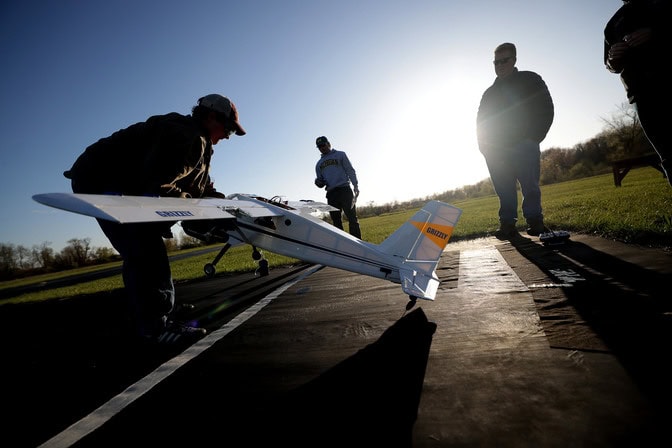
“Students get an understanding of the entire lifecycle—from customer concept, to establishing requirements, to designing, to building, to validating and to flying—all in an academic year,” said Halow.
Since the pilot, Halow has expanded into a series of courses. The first two terms, soon to be called 388 for both semesters rather than the original 288 and 388, introduce the students to each step in the process over a project that spans two terms. It follows the “just in time” management philosophy, so the students learn the model-based system engineering principles they’ll need for the next step in the life cycle of their project and immediately apply them.
Students who thrive in the first two terms may be selected to act as project leads, enrolling in 488. Aware that women are more likely than men to underestimate their own readiness for leadership roles, Halow invites students who have excelled to apply to the 488 course.
He is effusive in his praise of the MBSE students, and his high opinion has outside validation: Five students enrolled in the last three years have been recognized nationally on Aviation Week’s 20 Twenties list.
One of these is Maria Reitz, currently an instructor for the MBSE courses as she earns a master of science in engineering degree in aerospace engineering. Yesterday, she presented on the course series with Halow at the Siemens International Leadership Summit in Scottsdale, Ariz.